
Ośrodek Badań nad Świątynią Egipską IKŚiO PAN
ma przyjemność zaprosić Państwa na wykład Pana Christiana Ubertini (współpracującego z Instytutem Szwajcarskim Badań Architektonicznych i Archeologicznych nad Starożytnym Egiptem oraz Niemieckim Instytutem Archeologii w Kairze)
Wykład „The Temple of Osiris-Nesmeti in Elephantine, and other restitution studies” odbędzie się dnia 3 października godz. 14.00 w Sali 006 w Pałacu Staszica
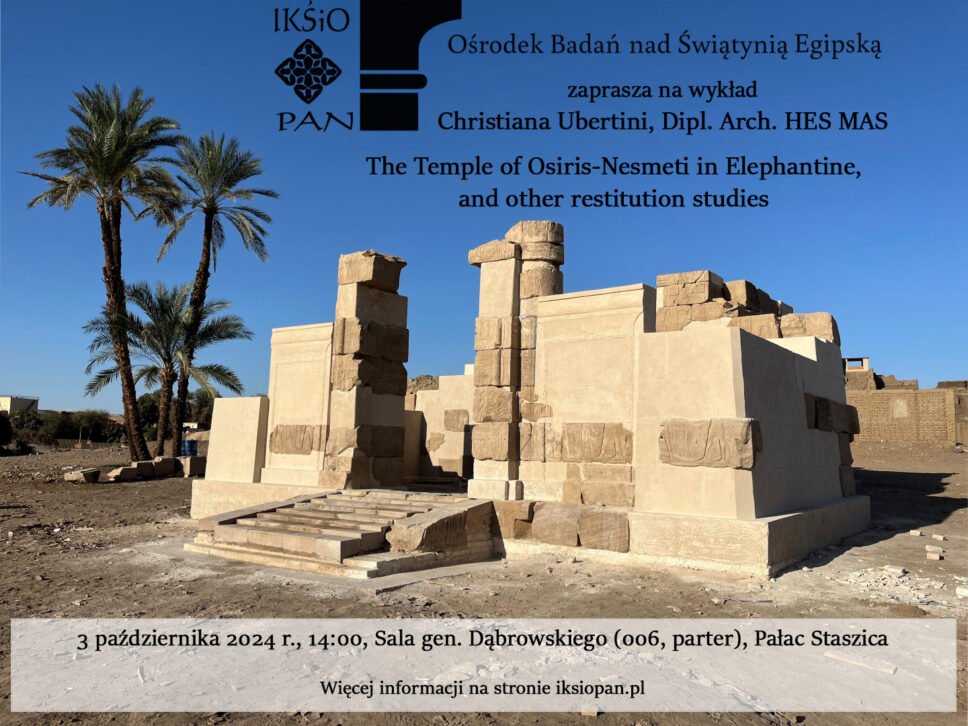
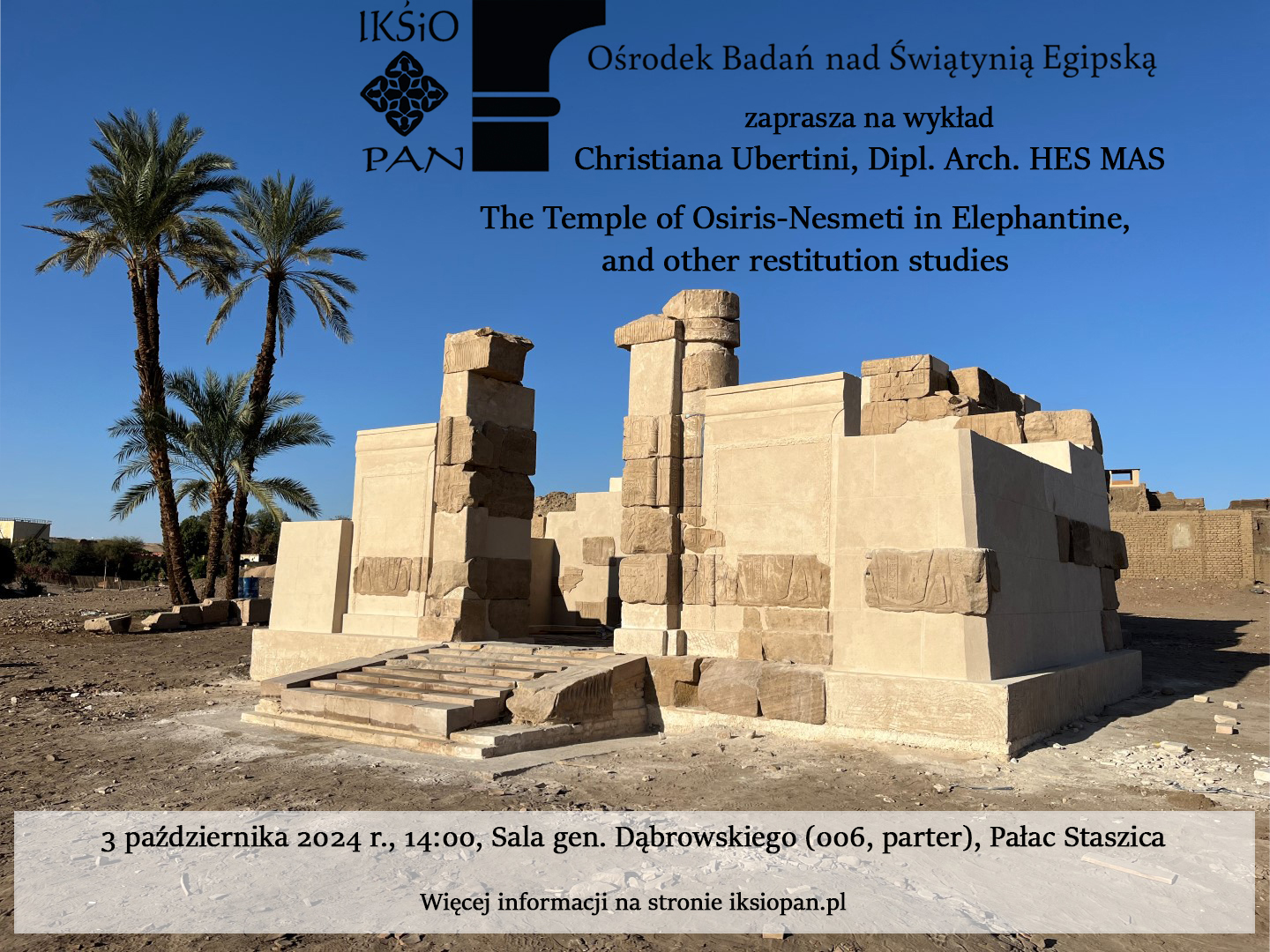
Built in the 1st century AD, the Temple of Osiris-Nesmeti was part of an unexplored sacral area in the northern part of the ancient city of Elephantine, which lies beneath the colourful Nubian village. While the temple’s existence had already been suggested in 1996 by the research on Ptolemaic and Roman spolia, its architectural study was made possible when about 300 of its blocks were found as reused material in a 6th century AD dated retaining wall. Relying on the perfect state of preservation of the blocks and on a meticulous analysis of tool and other construction marks left by the stone builders, the study could propose a detailed restitution of the temple, exploiting all the decorated elements and the many undecorated ones. The results were also able to feature some architectural evolutions of the very last Egyptian temples built during the Roman period. The Temple of Osiris-Nesmeti was part of a series of architectural studies on hitherto unknown sacral buildings of Elephantine from the Ptolemaic and Roman periods, undertaken between 1999 and 2002 by the Swiss Institute of Architectural and Archaeological Research on Ancient Egypt in collaboration with the German Archaeological Institute in Cairo. This works led to the partial reconstruction of the Temple of Osiris-Nesmeti which has been completed this year, nearly 25 years after the discovery of the blocks.
The lecture will offer an overview of the methodology and present different results that can be expected when studying a scattered material for which neither foundations nor other in situ evidence are known.
Christian Ubertini worked as a scientific collaborator for the Swiss Institute for Architectural and Archaeological Research on Ancient Egypt, for whom he carried out several restitution studies of Ptolemaic and Roman structures at Elephantine. He also made specific contributions to the study of late Egyptian temple architecture, with observations on the architectural evolution of screen-wall structures and sandstone masonry construction techniques.